Walton Ford’s World: Delirium of Animal and Man
I feel the beast’s stance in my throat - I feel the tension of his hind legs in my spine.
Fenrir’s large black body covers the canvas while a pale limb in the corner entices the jaws of the beast to sever it completely off the limb. He is bound by a silky pink ribbon called Gleipnir, whose strength seems inconsequential next to the hulking figure of the animal.
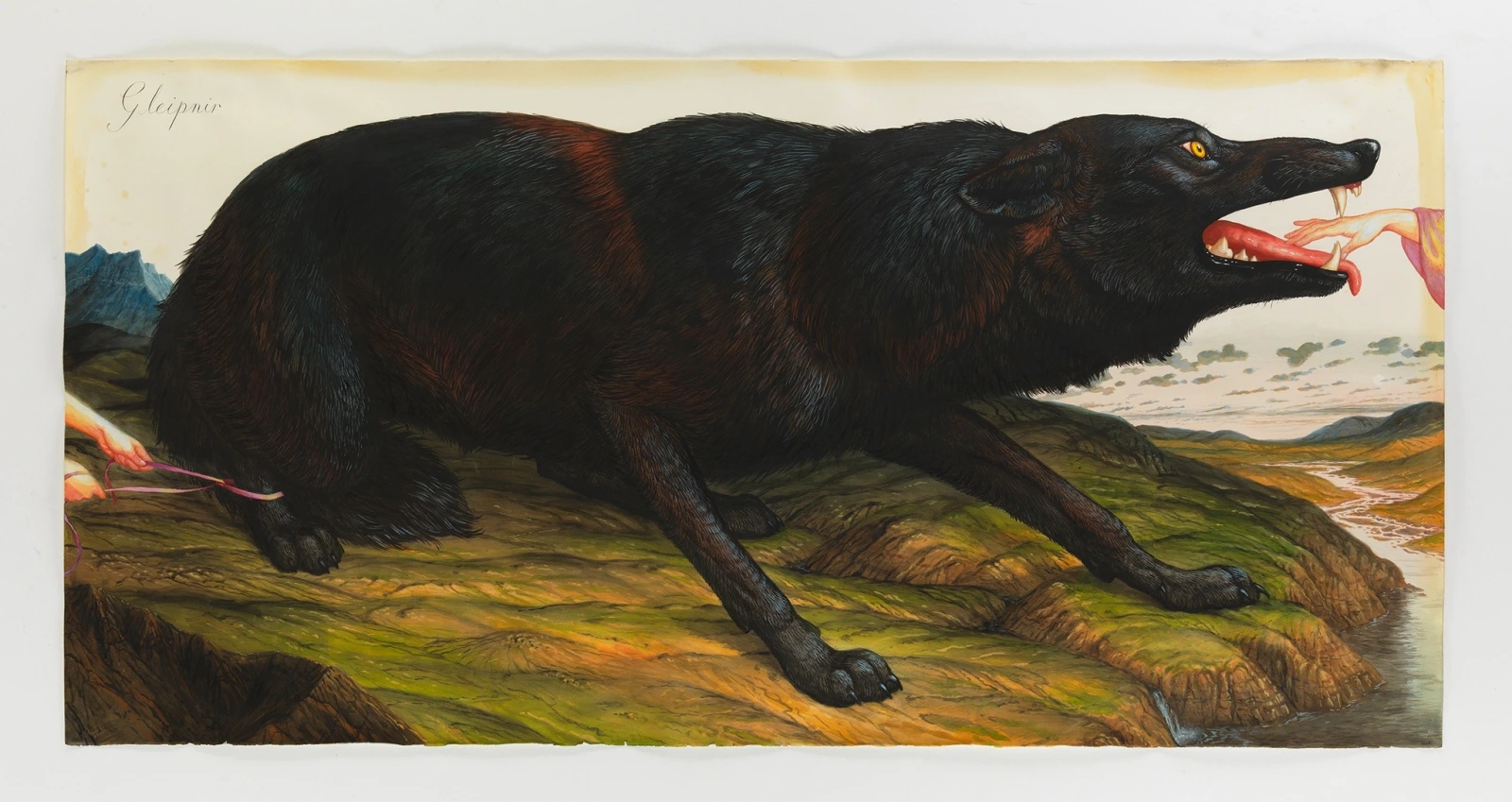
The painting is both mythic and unsettling, blurring the line between predator and prey, reality and fable. This tension lies at the heart of Walton Ford’s piece Gleipnir, where the fantastical collides with naturalist narratives for a spin of the unusual.
For the American artist Walton Ford, this is commonplace. Ford’s art is vivid and wild, pushing the viewer to find the storyline embedded into his subjects. His landscapes seems to grapple with the confines of their canvas, exhibiting the punishing nature of animal order and unabashed pride for the untamed.
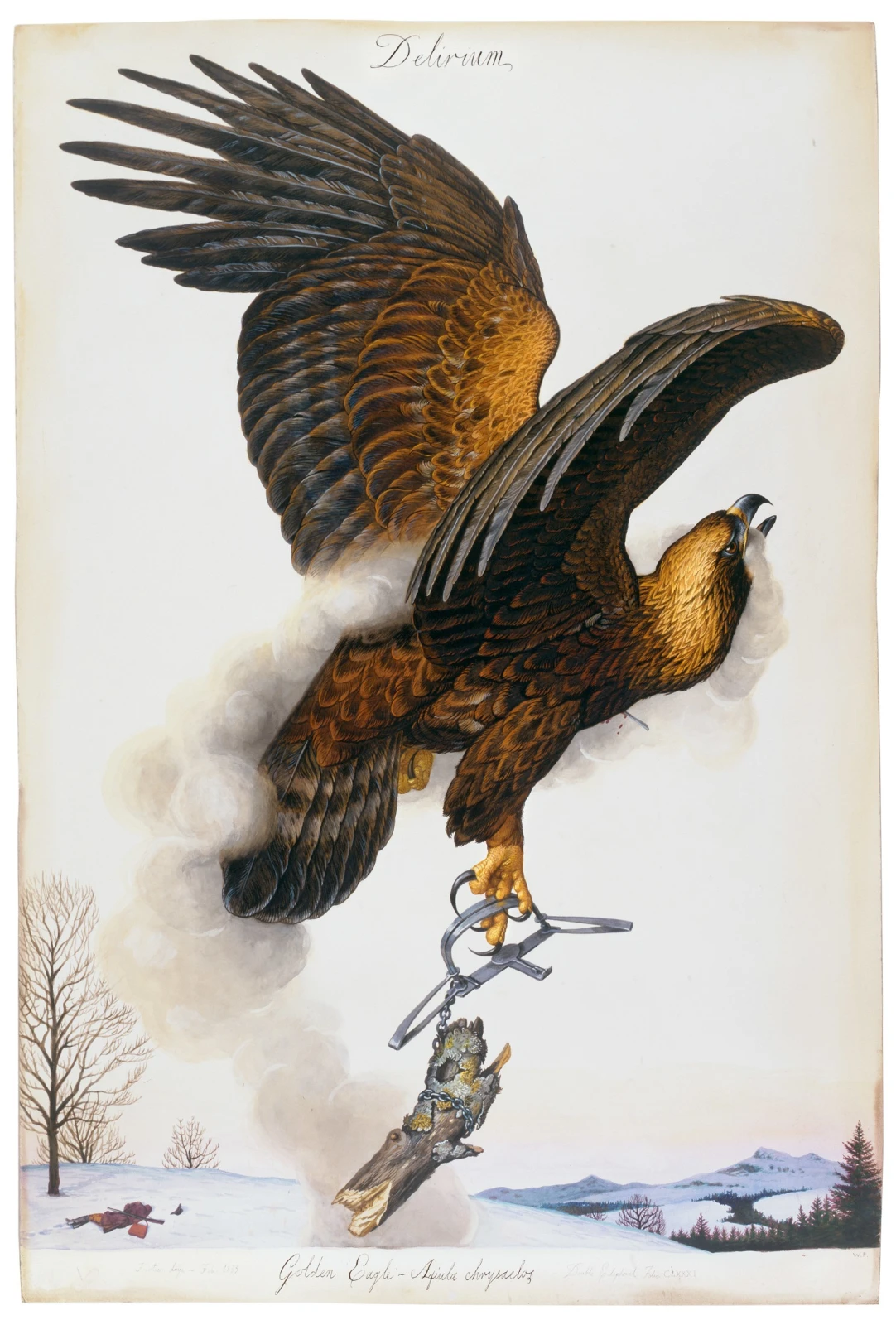
Selfishly, in hopes of bringing some of his genius with me, I had went to CVS to print out a selection of his work before the start of junior year. My favorite out of the set, Delirium (2004), was a vertical painting of a bald eagle in flight, intended to hang in my room above my desk. When my roommates inquired about my selection of posters, I ecstatically showed them the poster of the bird.
“Oh so your room is going to be hunting themed?”
No you cretin, it is not. Safe to say they sorely misunderstood the subject, so I relocated the poster to my childhood bedroom for the pleasure of more discerning eyes.
But for the more perspicacious reader, it would be my honor to introduce the history, background, and interpretations of Delirium (2004), and why it represents such a piece of brilliance to me.
To start, we must turn our attention to an ornithologist by the name of John James Audubon.
The Natural Order of Birds, Skulls, and Race
“I must acknowledge that as I watched his eye, and observed his looks of proud disdain, I felt towards him not so generously as I ought to have done” - John James Audubon, 1835
John James Audubon was a naturalist and ornithologist credited for documenting and introducing the public to the biodiversity of America. His seminal The Birds of America was his magnum opus and response to his life’s objective of illustrating all bird species in America.
Comprising 435 life-size prints, The Birds of America graces museums across the country, reverently coddled in air conditioned rooms and treated to the silk gloves as museum conservatives riffle through their pages. Audubon too is graced with such admiration; buildings, neighborhoods, and streets sport his name - a testament to his contributions to science and a promise to withhold his legacy.
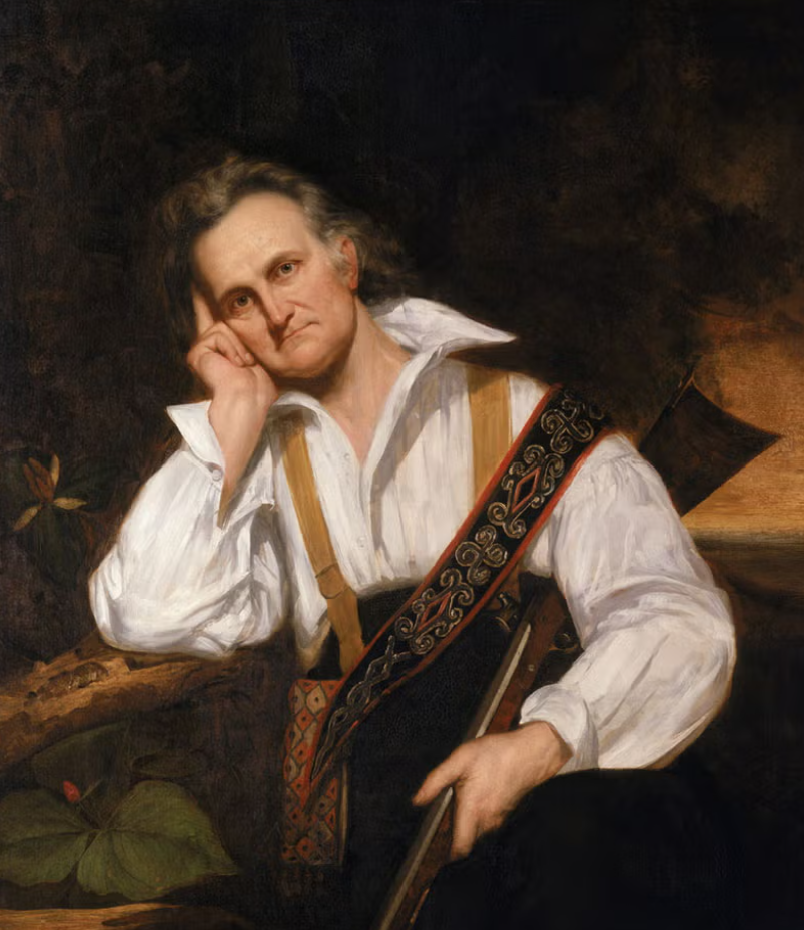
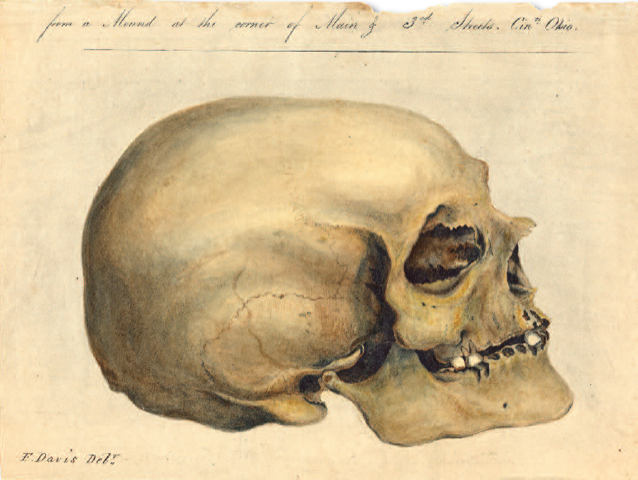
But every coin has two sides. The naturalist was a staunch anti-abolitionist who embraced racial pseudoscience. Famously, Audubon collected five skulls of the unburied on a battlefield during the Texas War to be sent to Samuel Morton. Morton used these skulls to “define racial categories and hierarchies” by studying cranial differences that he thought to define human races. Unsurprisingly, Morton thought that the race with the largest brains, and consequently had the highest intelligence, belonged to Caucasians12.
Audubon “had no stance on slavery” according to earlier biographers by…owning slaves. It is known that the Audubon household continually bought and sold slaves as financial constraints allowed.
Audubon never saw people of color, African Americans and the Indigenous, as equals. Even when outsourcing assistance and observations to communities who were adept with the local flora and fauna, John Audubon refused to acknowledge or credit their expertise. Instead, he coined multiple racially charged short stories depicting Black men as menacing and dangerous, hoping to captivate readers with the ‘savageness’ of the ‘other race’.
It is still not understood if Audubon was mixed race having self cited (and lied) about his mothers European origins3.
Trapping a Golden Eagle
According to the New England Journal of Aesthetic Research, “…on February 24, 1833, Ethan Allen Greenwood asked Audubon to help him identify a live eagle he purchased from a man who hunted fox with spring traps in New Hampshire’s White Mountains.”
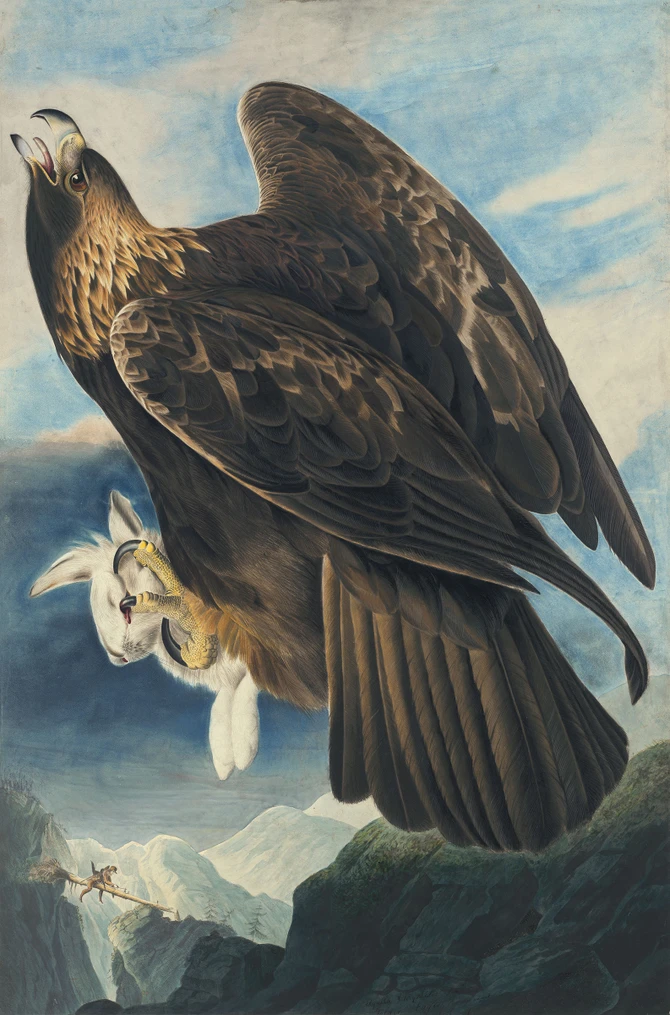
Audubon recounts his experience of setting the trap and waiting for it to catch in his 1835 Ornithological Biography, citing by the morning the bird was caught by one of its talons, notwithstanding a struggle. Audubon convinced Greenwood to sell the 3-foot-long female golden eagle to him, hoping to capture it’s 7-foot wingspan in his The Birds of America etchings4.
In his biography Audubon oscillated between wanting to set the bird free “might he return to his native mountains…spread out his broad wings and sail away towards the rocks of his wild haunts” or pin his wings onto a board “for the express purpose of shewing you his semblance”.
The more he observed the bird, the more his ambivalence grew, and in the end, Audubon’s own fever to capture the bird’s natural elegance and pride won out over “the more generous design of setting him at liberty”.
The next day he locked the bird in a small shed, sealing it with blankets and a pan of charcoal. He waited for the bird to inhale the fumes and suffocate, listening for the telltale sign of its body falling off its perch.
After hours of waiting Audubon finally checked on the bird - only to find its unflinching eyes staring back at him. This time, he intensified his efforts by adding sulfur to the shed to a point of unbearability even for himself. But alas the bird still lived, so Audubon, as a last resort, pierced the bald eagle’s heart with a pointed piece of steel. His “proud prisoner instantly fell dead, without even ruffling a feather”.
While working on the painting of the dead pinned golden eagle, Audubon was “suddenly seized with a spasmodic affection”. The stroke rendered much of his lip paralyzed and his hands unusable.
The Descent Into Delirium
In Delirium (2004), painted by Walton Ford, we see the same bald eagle from Audubon’s illustrations. Her chest heaves from the metal spike driven into her heart and she chokes on the noxious fumes of charcoal and sulfur from the shed. Yet, even chained onto her perch, she is free from death. On the bottom left we see a rendition of Audubon lying on the snowy ground. He is dead, supposedly succumbing to the stroke that almost took his life in 1833.
The Folly of Animal and Man
This painting is striking to me on so many levels. The bird seems to cry out into the snowy landscape, avenging her past reality to set herself free from the chains of human brutality. She transcends her bindings as she escapes with her shackles.
Her life in the hands of her prisoner is nothing more than an accessory of human greed. Her captor, in hopes of capturing her animal presence for himself, intends to discard her body, letting her rot as he parades his imposed image of her. He forces a reinvention of the bird through his illustration, and to make sure his representation is superior, kills her. He trifles with the idea of mercy, but in his mind only one can exist, and with the power to terminate others, willingly does so.
But Walton Ford punishes Audubon for his cruel folly by reversing their subject’s interactions with death. Balancing the scales, he allows for one moment in time, for an irrational - delirious - instance, to let animal triumph over man. But the bird is not freed unscathed as she flees with the accessories of chains on her legs and a spike through her heart.
She herself is crazed from the smoke and realistically faces demise. Instead of her wings tacked to a board, her body will be pinned by the gravity of death. Her delirium is inevitable - her strength to hold out among the smoke is foolishness. Ford gives her the moment of success, but illustrates her impending doom on the horizon of her new chance of life.
In contrast to Ford’s Delirium, Audubon’s Golden Eagle is staid in nature. It’s a polite rendition of a majestic eagle that is barely off the ground. Ford understands these absences of - ironically - life, by foiling his painting with Audubon’s.
Ford’s eagle faces the other way, her wings are open, and instead of clutching sustenance in her talons, is bound by the metal of her captor. Instead of pandering to Audubon’s self eulogization of his adventurous acts - seen by his own self portrait in the landscape straddling a tree and wrangling with birds - Ford depicts Audubon inflicted by his own actions, too blind to see past his delirium of conquering the landscape around him to feel his heart fail.
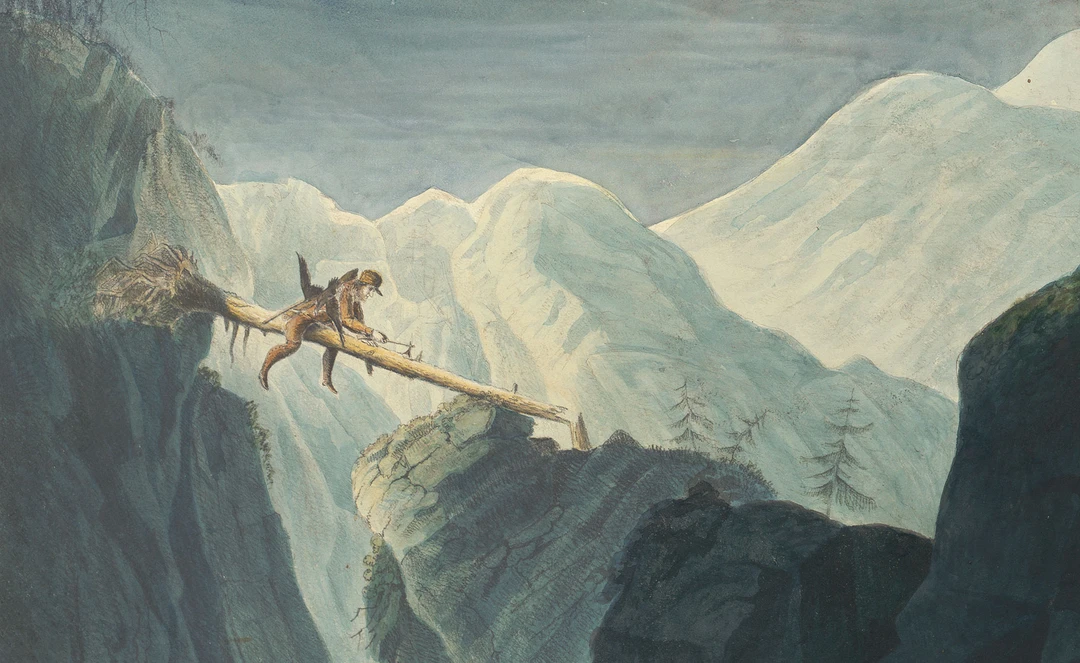
I like to think of Walton Ford’s revival of the Golden Eagle as a metaphorical unraveling of John James Audubon’s pursuit of dominance in race, achievement, and intellectualism.
Audubon’s foray into conquering mother nature is not unlike his campaign for racial hierarchy. By trying to tame the wilderness and natural order around him, Audubon tries to mimic the superiority he finds throughout his racial rhetoric by wrestling with his subject’s nature in hopes of molding their presence under his own. He, the artist, wields the brush but also the sword - two instruments he uses to reroute and rewrite history.
In the end delirium is inflicted on both bird and human - a small reprieve of balance that Ford allots us among the scenery of human barbarity.